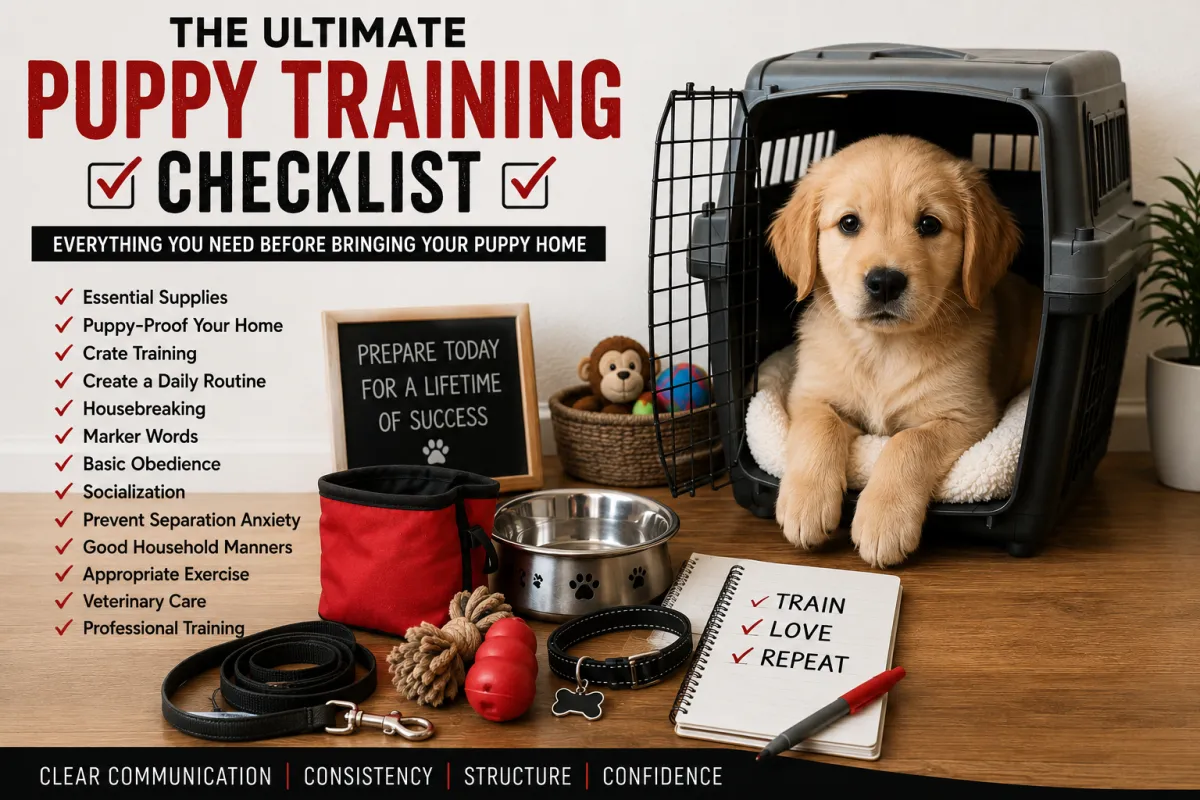
The Ultimate Puppy Training Checklist
The Ultimate Puppy Training Checklist: Everything You Need Before Bringing Your Puppy Home
By Zero To Sit Dog Training | Daytona Beach, Florida
Bringing home a new puppy is one of the most exciting experiences for any dog owner. It's also one of the most important times in your dog's life. The habits your puppy develops during the first few months can shape their behavior for years to come.
The good news? A little preparation goes a long way.
At Zero To Sit Dog Training, we've helped countless families raise confident, well-behaved dogs. This ultimate puppy training checklist will help you prepare your home, avoid common mistakes, and set your puppy up for success from day one.
Before Your Puppy Comes Home
Preparation is key. Before your puppy arrives, make sure you have everything ready.
Essential Supplies
✔ High-quality puppy food
✔ Food and water bowls
✔ Flat collar with ID tag
✔ 6-foot leash
✔ Long line (20–30 feet) for recall training
✔ High-quality crate or kennel
✔ Comfortable crate pad or bedding (if your puppy isn't likely to chew it)
✔ Durable chew toys
✔ Interactive enrichment toys
✔ Treat pouch
✔ Grooming supplies
✔ Pet-safe cleaner for accidents
✔ Baby gates (if needed)
✔ Poop bags
✔ Nail clippers or grinder
Puppy-Proof Your Home
Puppies explore with their mouths.
Before your puppy arrives, remove or secure anything they shouldn't chew.
Be sure to:
Hide electrical cords
Remove toxic houseplants
Store medications safely
Put shoes away
Secure trash cans
Move cleaning supplies out of reach
Keep children's toys picked up
Block access to unsafe rooms if necessary
Taking a few minutes to puppy-proof your home can prevent expensive vet visits and unwanted habits.
Start Crate Training Immediately
One of the best decisions you can make is introducing the crate on day one.
A properly introduced crate helps with:
Housebreaking
Preventing destructive behavior
Building independence
Creating a safe place to relax
Safe travel
Boarding and veterinary visits
At Zero To Sit Dog Training, we recommend solid-sided plastic or roto-molded kennels over wire crates because they provide a more secure environment and reduce the risk of injury for dogs that attempt to escape.
The crate should always be introduced calmly and become a positive part of your puppy's daily routine.
Create a Daily Routine
Puppies thrive on consistency.
Try to keep the following on a predictable schedule:
Wake-up time
Meals
Potty breaks
Playtime
Training sessions
Rest periods
Bedtime
Dogs learn faster when they know what to expect each day.
Begin Housebreaking Right Away
Don't wait several days to start potty training.
Take your puppy outside:
First thing in the morning
After every meal
After naps
After play sessions
Before bedtime
Anytime they appear to be sniffing or circling
Reward your puppy immediately after they eliminate outside.
Teach Marker Words Early
Clear communication makes training much easier.
At Zero To Sit Dog Training, we teach marker words that help puppies quickly understand what's expected.
Examples include:
Yes – You made the correct choice and a reward is coming.
No – That was not the correct choice. Let's try again.
Go Play – You're finished working and are free to relax.
Teaching these simple markers creates faster learning and clearer communication.
Start Basic Obedience
Even young puppies can begin learning.
Focus on building engagement rather than perfection.
Early commands may include:
Sit
Come
Place
Heel foundations
Let's Go
Off
Quiet
Wait
Keep training sessions short, positive, and fun.
Several five-minute sessions each day are far more productive than one long session.
Build Confidence Through Socialization
Socialization isn't simply letting your puppy meet every person and dog they see.
True socialization means exposing your puppy to the world while teaching them to remain calm and confident.
Introduce your puppy to:
Different people
Children
Men with hats
Umbrellas
Bicycles
Wheelchairs
Loud noises
Vacuum cleaners
Different flooring surfaces
Car rides
Veterinary offices
Grooming environments
The goal isn't constant interaction.
The goal is teaching your puppy that new experiences are normal.
Prevent Separation Anxiety
One of the biggest mistakes owners make is never allowing their puppy to spend time alone.
Teach independence early by:
Using the crate daily
Leaving the room occasionally
Practicing short departures
Avoiding emotional goodbyes
Keeping arrivals calm
Confident puppies grow into confident adult dogs.
Teach Good Household Manners
Don't wait until unwanted behaviors become habits.
Begin teaching your puppy:
No jumping
No mouthing people
No counter surfing
Waiting politely at doors
Calm greetings
Respecting personal space
It's much easier to prevent bad habits than to eliminate them later.
Exercise Your Puppy Appropriately
Puppies need both physical and mental exercise.
Activities may include:
Short walks
Obedience training
Play sessions
Puzzle toys
Food enrichment
Exploring new environments
Remember that puppies are still growing.
Avoid excessive running or repetitive high-impact exercise.
Schedule Veterinary Care
Before bringing your puppy home, locate a trusted veterinarian.
Keep up with:
Vaccinations
Deworming
Flea and tick prevention
Heartworm prevention
Wellness exams
A healthy puppy learns more effectively.
Invest in Professional Training Early
One of the biggest misconceptions is waiting until problems develop before hiring a trainer.
Professional training during puppyhood often prevents:
Leash pulling
Jumping
Barking
Reactivity
Resource guarding
Poor recall
Separation anxiety
Early guidance saves owners time, money, and frustration.
Common Puppy Training Mistakes
Avoid these common errors:
Giving too much freedom too soon
Being inconsistent with rules
Waiting too long to begin training
Skipping crate training
Accidentally rewarding unwanted behaviors
Expecting too much too quickly
Inconsistent potty routines
Failing to supervise
Remember, puppies aren't being stubborn—they're learning.
A Balanced Approach to Puppy Training
At Zero To Sit Dog Training, we believe puppies thrive when training combines clear communication, consistency, fair expectations, and structure.
Our balanced approach focuses on teaching puppies how to make good decisions while building confidence and trust.
The goal isn't simply teaching commands.
The goal is raising a calm, confident, obedient companion that your family can enjoy for years to come.
Final Thoughts
Your puppy's first few months are an incredible opportunity to build lifelong habits.
With preparation, consistency, and proper guidance, you can prevent many common behavior problems before they ever begin.
Training starts the moment your puppy comes home—not months later.
Invest the time early, and your future self will thank you.
Need Help Training Your Puppy?
Whether you're bringing home your very first puppy or adding another dog to your family, Zero To Sit Dog Training can help.
We provide professional private, in-home puppy training throughout St. Augustine, St. Johns County, Palm Coast, Flagler Beach, and Daytona Beach.
